


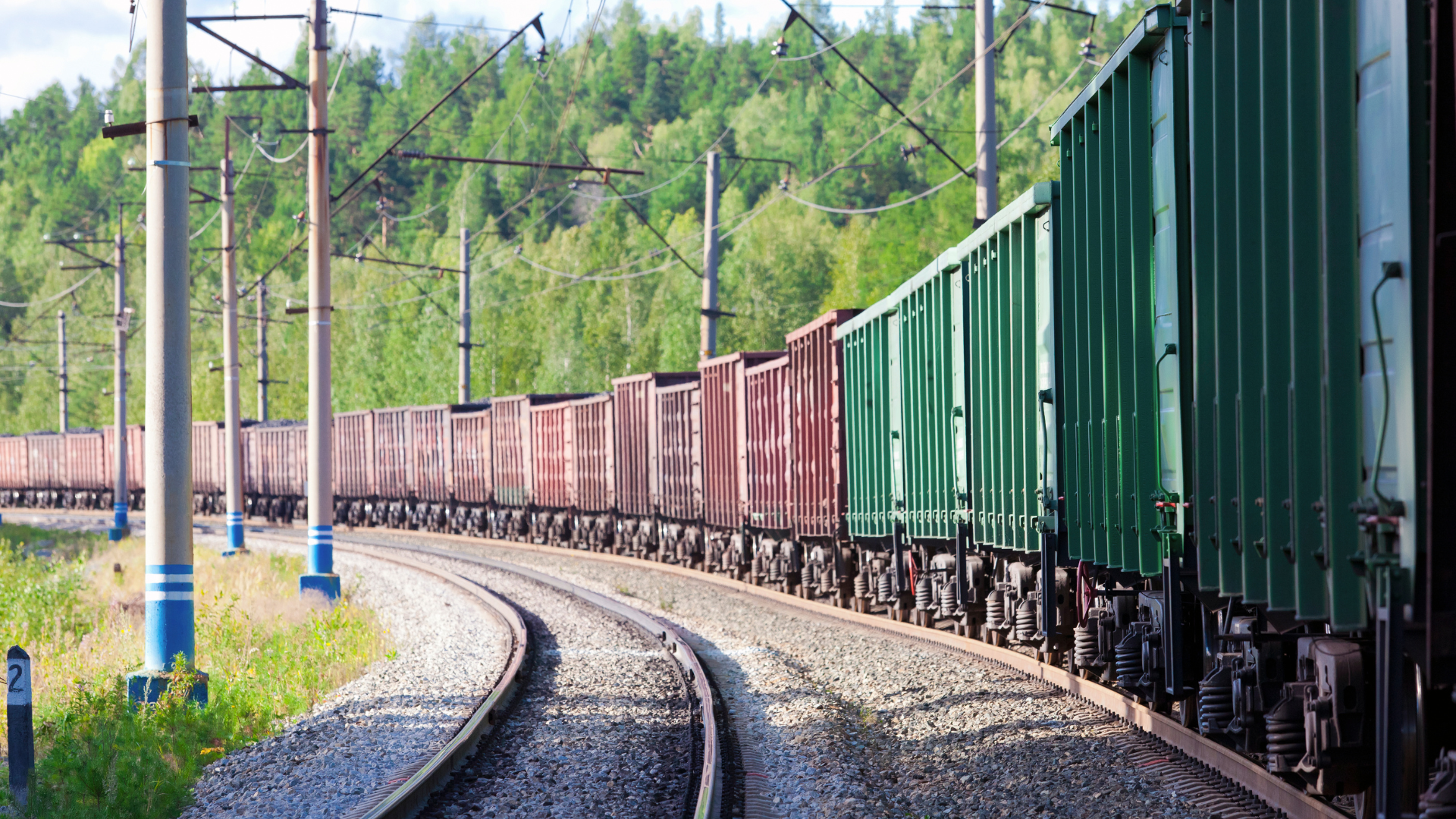
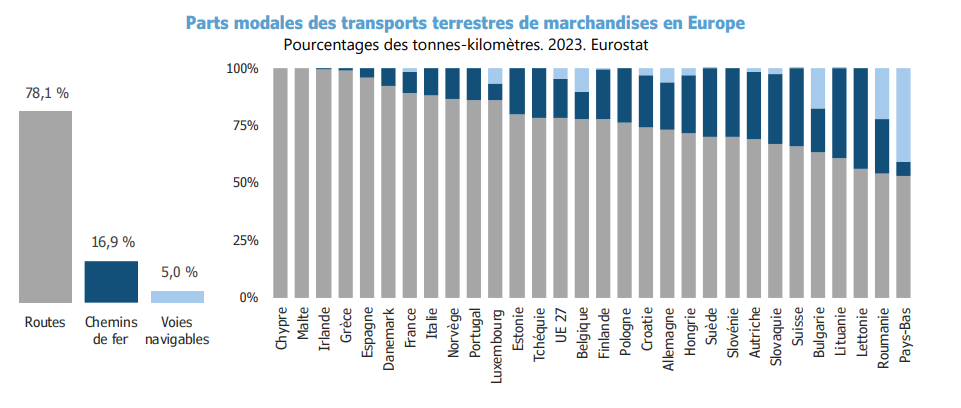
Freight transport accounts for a significant portion of France's carbon footprint, yet rail plays a minor role, with a 9% modal share compared to the European average of 17%. However, the potential for catching up is well-documented: according to an estimate by SNCF Réseau, a ten-point shift in modal share toward rail would cover up to a third of the national transport decarbonization targets : in the French low-carbon trajectory, it would only represent 3.5 MtCO2 avoided by 2030, compared to 6 for heavy-duty vehicle electrification (a significant lever that must go hand in hand with piggyback transport). But why has this potential, documented for thirty years, struggled to materialize?
When a shipper obtains a road transport solution in forty-eight hours, they have to contend with an average lead time of six months for a rail path - the rail traffic slot allocated to a train, corresponding to the authorization to use a specific route on the infrastructure at a given time. The 2023 strikes cruelly illustrated this fragility: 57% of shippers surveyed reported having shifted flows to road transport that year, and 17% have since permanently changed their logistics organization. The French network is not saturated everywhere: it was the priority long given to passenger trains that sidelined freight. This situation has improved in recent years, as in 2024, the path-day rate - which designates, as a percentage, the share of path-days effectively and firmly allocated compared to the total number of path-days requested by railway companies - has improved and reached the long-term target of the performance contract (89%).
Underinvestment exacerbates the situation: France spends approximately €4.7 billion/year to its rail network, compared to €23 billion/year in Germany. But money isn't the only factor: France has equipped only 4% of its network with ERTMS digital signaling, compared to 18% in Spain. This system allows more trains to run without building a single new track, at a much lower cost than heavy infrastructure. On the Paris-Lyon line alone, this standard would allow for increasing hourly capacity from 13 to 16 trains.
This imbalance also stems from the history of the SNCF. In the 1980s and 1990s, the SNCF's attention was focused almost exclusively on the rise of the TGV; freight, long considered a noble rail activity, paid the price, serving as a financial buffer to generate liquidity. This hierarchy was never overturned: it even led, at the end of 2024, to the dissolution of Fret SNCF, which was split into two separate entities, Hexafret and Technis. An informal internal hierarchy long placed the TGV at the top and freight at the bottom of the ladder. A corporate choice, not a geographical inevitability: in other European countries, the allocation of train paths is entrusted to a truly independent body, guaranteeing a neutrality that France struggles to establish via the delegation of this mission to SNCF Réseau.
Switzerland offers an illuminating counter-model: since 2016, a federal law has legally reserved train path capacity for freight several years in advance, in a way that is binding for infrastructure managers. An explicit political choice, not a technical feat. Beyond this regulatory dimension, a climate issue is now added to a industrial challenge : China, already the world's leading producer of competitively priced railway equipment, is threatening the European industry, hence the growing calls for a merger between Alstom and Siemens.
The French goal of doubling the rail freight modal share by 2030 is now considered unattainable by all industry stakeholders. Simply bypassing major rail hubs would require an additional €7 billion, with no identified source of funding to date. Decarbonizing freight is not a matter of available technology, but of the will to invest and reorganize.