


.png)
By Elsie Nakhle, analyst at Zenon Research
Freight transport accounts for 13% of national greenhouse gas emissions in France, a growing sector where decarbonization is lagging behind. Yet, the potential of the substitute solution has been documented for a long time: for the same load, a freight train carries the equivalent of forty heavy goods vehicles while emitting nine times less CO₂ and consuming six times less energy. The scale of the challenge is significant: a ten-point shift in modal share from road to rail would alone cover between 22% and 33% of the national decarbonization target for the transport sector. It is on this basis that France has set a goal to increase the rail share from 9% to 18% and the inland waterway share from 2% to 3% by 2030 (though the drought in the summer of 2026 has directly impacted inland waterway freight transport). However, road transport still accounts for nearly 88% of domestic freight.
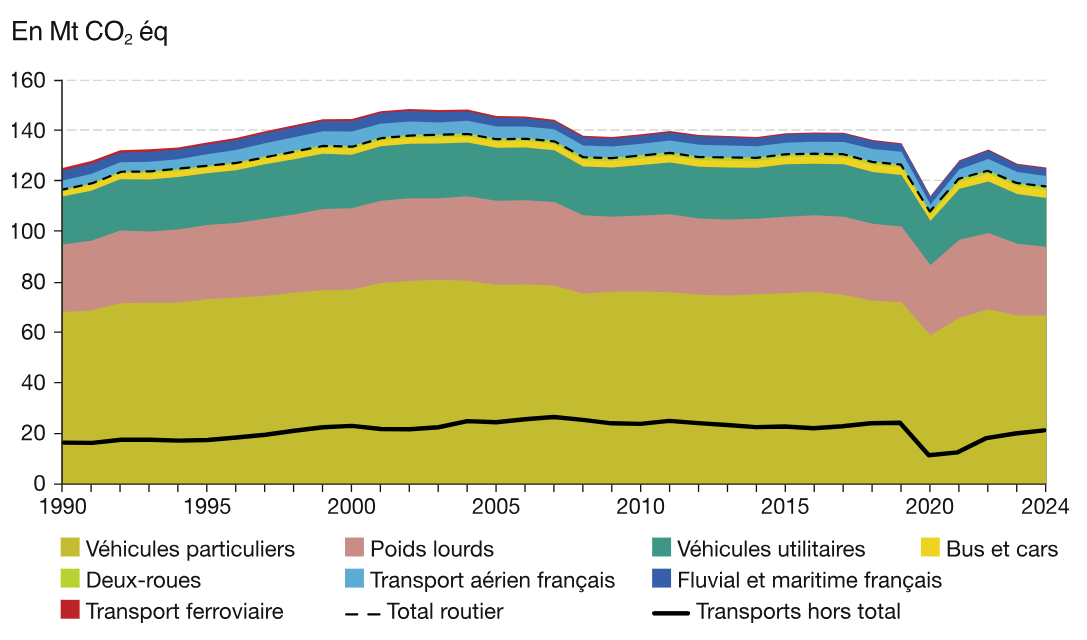
Fig. 1: Trends in greenhouse gas emissions from transport
Note: Road freight is only a portion of the total, and it is this portion that we are focusing on in this analysis. It should also be noted that there is a distinction between land freight transport and passenger transport.
This paradox is explained by three cumulative barriers. Infrastructure: multimodal terminals remain insufficient, rail paths suffer fromchronic underinvestment, and the reliability of delivery times penalizes the competitiveness of the mode. Flexibility: switching to rail exposes shippers to uncertainties that are difficult to plan for. The assessment is harsh: while some European countries boast modal shift rates of 30% to 50%, France is struggling to develop alternatives to road transport. The third barrier is informational : multimodal shipping involves multiple operators with incompatible systems, lacking a common standard for data exchange between modes.
This is where synchromodality comes into play. The principle reverses traditional logic: rather than fixing the transport mode at the time of order, this choice is optimized in real time based on available capacity (rail, river, or road), while taking into account emissions and decarbonization prospects. Scientific models converge on a clear order of magnitude: switching transport modes can lower emissions by up to 70% compared to all-road transport. However, this dynamic optimization only works if data flows freely between operators, which remains the exception today. The eFTI regulation provides an initial substantive regulatory response (though non-binding for companies): its first implementing acts came into force in January 2025, with the obligation for all EU member states to process transport documentation electronically via certified platforms starting in July 2027. Furthermore, the European Commission is mobilizing €20 million under Horizon Europe to fund projects for interoperable digital solutions for multimodal freight, explicitly including synchromodal models. According to a study, 68% of logistics decision-makers surveyed identify digital transformation as their top priority for 2026, with the most advanced operators already unifying booking, execution, and documentation within multi-modal and multi-carrier platforms.
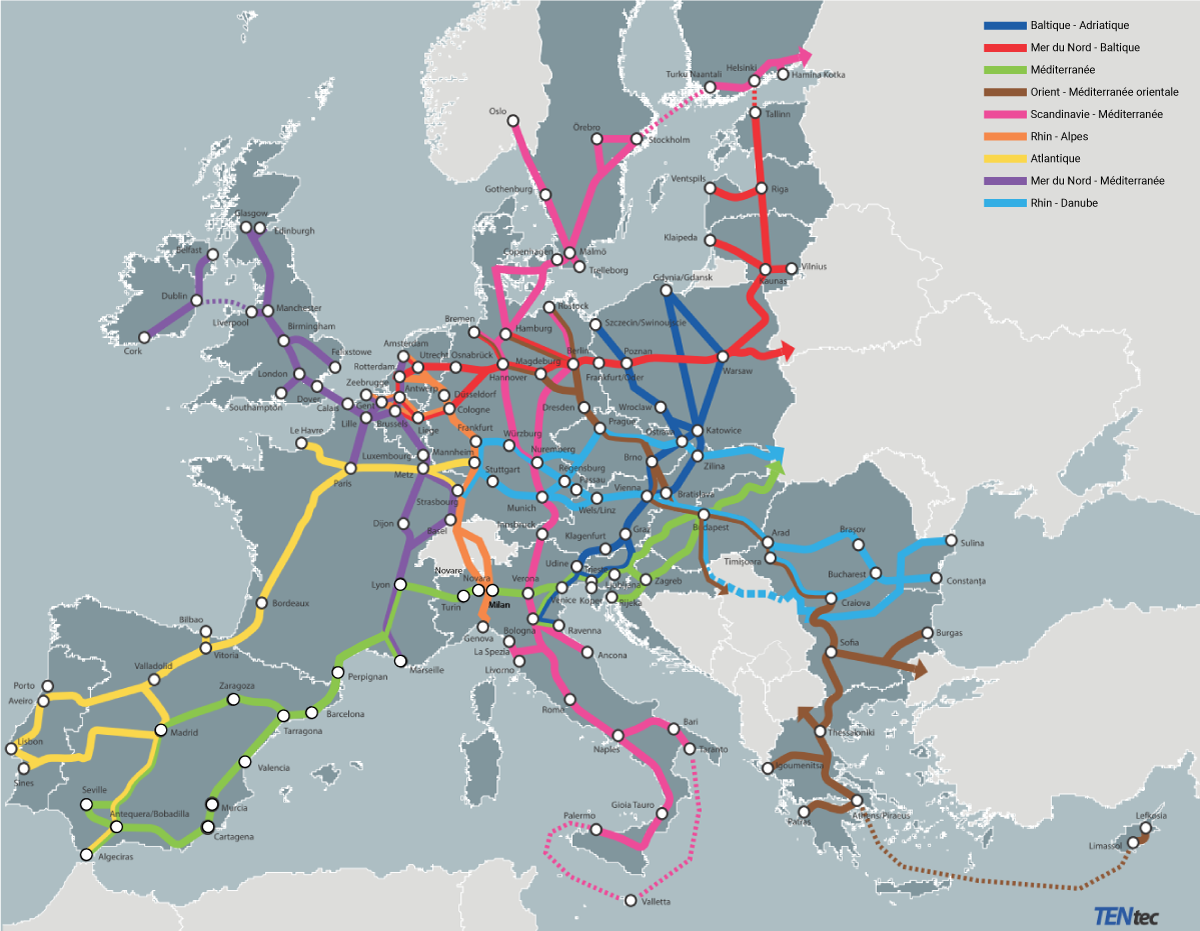
Fig. 2: The 9 transport corridors of the TEN-T core network

Structural limitations remain. Digital technology does not create capacity where none exists: the €4 billion committed by the State and SNCF Réseau to modernize freight infrastructure by 2032 remains an essential prerequisite. In the field, initial deployments confirm the model's viability while exposing its practical constraints (a lead time extended by approximately 24 hours and dependence on existing rail lines) that many industrial sectors ultimately deem compatible with their requirements.
The 2025-2026 French logistics roadmap, presented at the end of 2024, includes decarbonization and modal shift among the sector's fourteen priority objectives. The challenge remains less technological than systemic: it requires data interoperability, coordinated infrastructure investments, and new business models between competing players. Synchromodality is not a freight revolution on its own, but it could be its decisive catalyst. One question remains open: can we reach an 18% rail modal share by 2030 without a common, nationwide data platform?