


In 2024, cumulative global private investments in quantum technologies reached $11 billion, for $42 billion of public commitments, revealing a maturity level that was then still low. 2025 was Declared by the United Nations International Year of Quantum Science and Technology. In 2026, The word quantum is essential in the speeches on the energy transition. Behind this label, however, there is a paradox: this sector, presented as a climate solution, itself has an environmental balance sheet. It should be examined.
Cooling a superconducting quantum computer requires reaching 15 mK, 200 times colder than interstellar space. Each dilution refrigerator would consume between 5 and 10 kW continuously. At the scale of a complete quantum computing system, the consumption would reach around 55 kW compared to 22,000 kW for an equivalent classical supercomputer (Figure 1). This favorable ratio masks blind spots: the Sector mobilizes critical materials that are geopolitically concentrated — niobium, indium, tantalum, helium-3 — whose supply chains are mostly controlled by China. In addition, no life cycle measurement standard A complete quantum computer does not exist to date. However, digital projections invite caution: the sector (ICT) could represent 21% of global energy consumption in 2030 despite continued efficiency gains — Illustration of the Jevons paradox.
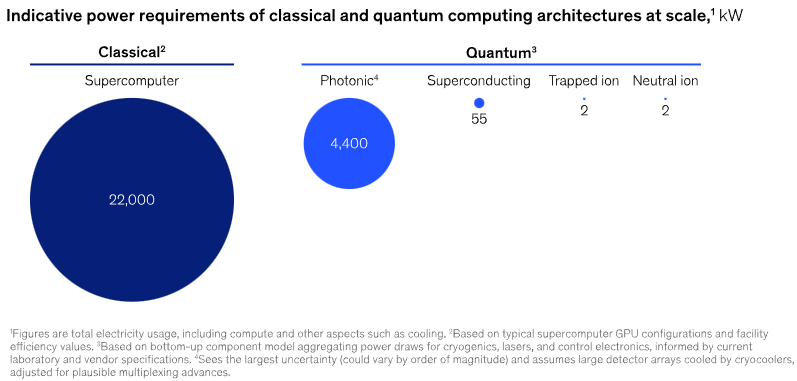
Figure 1 - Comparison of indicative power consumption by computer architecture (McKinsey, 2026)
However, some other quantum applications can already contribute concretely to the transition. HTS superconducting cables transport electricity without resistance, with a current density 200 times greater to conventional cables, and come to fruition henceforth. Quantum materials are also paving the way for a more durable electrical storage. On the quantum sensor side, gravimeters, magnetometers and atomic clocks Allow to map CO₂ reservoirs, monitor networks and synchronize variable renewable energies (figure 2). The global quantum sensor market thus reached $400 million in 2024, with annual growth projected at 15.7% until 2032.
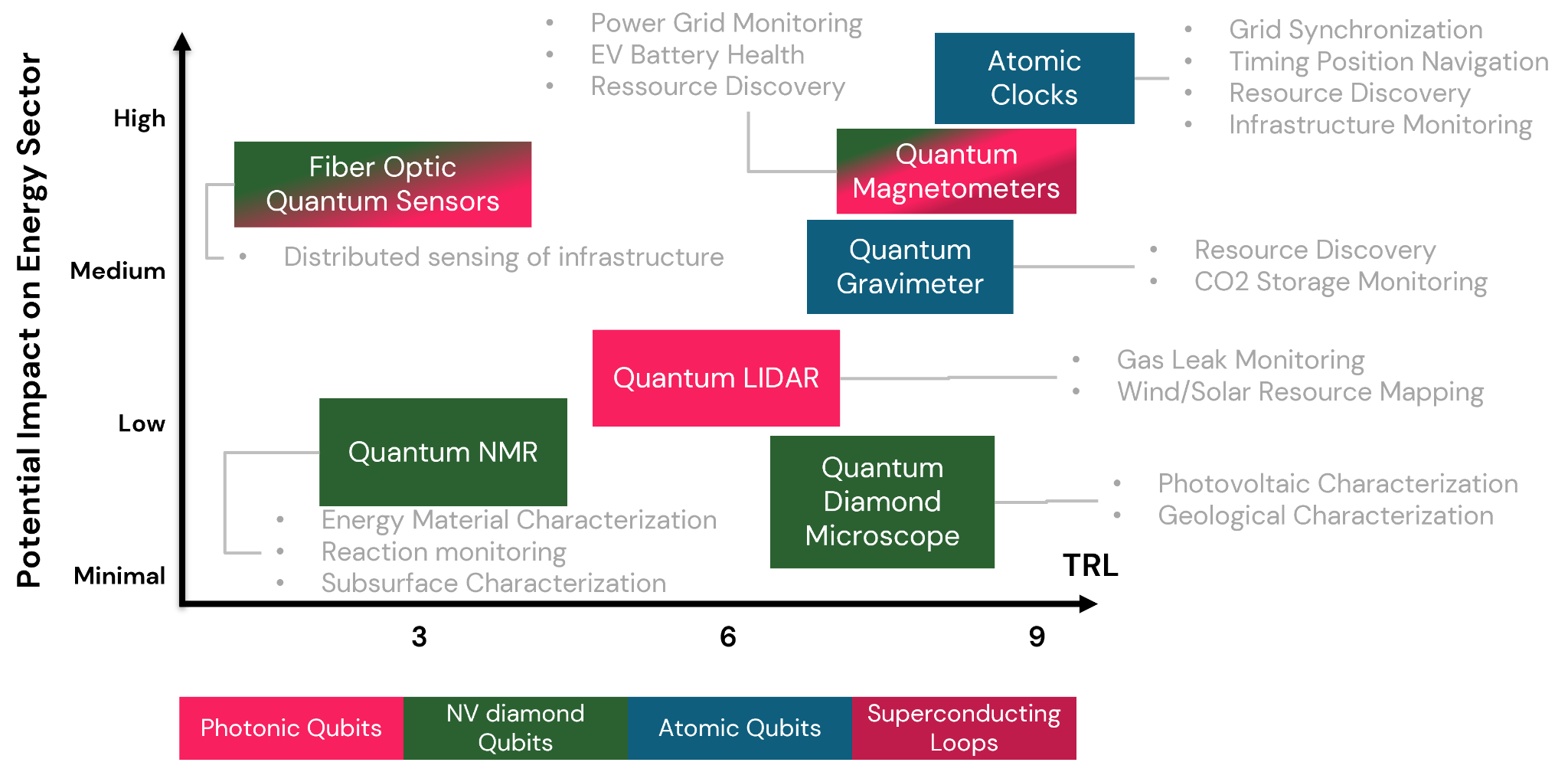
Figure 2 - Level of maturity of quantum sensor technologies for energy applications (based on crawford et al., 2025)
The contribution of quantum computers to the transition is promising but conditional. Their ability to simulate the quantum behavior of molecules — where classical computers struggle with exponential growth in computing time — could Accelerate material discovery for batteries, electrolysis catalysts or CO₂ capture. The first applications are already emerging: network optimization with EDF, Simulation of magnets without rare earths for motors and wind turbines. But the first climate-relevant realization of quantum physics is not expected before 2030, and the Correction of quantum errors remains an open challenge. Added to this is the risk of” Harvest Now, Decrypt Later ” : malicious actors collect encrypted data protecting energy infrastructures, to decipher them when a sufficiently powerful computer is available.
The window for climate action between 2030-2035 is narrow, precisely where the contributions of quantum computers remain the most uncertain. Quantum sensors and materials deserve immediate attention and investments, as their benefits are measurable today. Quantum computers are part of a long term strategy Who will not produce climate-significant results only with proactive governance : environmental management of the sector, securing supplies of critical materials, prioritization of use cases with maximum impact. Quantum is not a providential savior: it is a conditional amplifier, whose net balance depends as much on deployment choices as on scientific advances.
Photo credit: Getty Images