



Water stress is no longer limited to desert regions, the Middle East or North Africa. Under the effect of global warming, it is becoming a growing issue in other regions of the world, especially in Europe. In 2025, around 3.6 billion people would have already suffered from inadequate access to water, It could be 5 billion by 2050.
Faced with this growing pressure on water resources, a solution is gradually being required in the national strategies of the countries concerned: the desalination of seawater. Global production of desalinated water has thus increased from around 10 Mm³ per day in 1990 to nearly 120 Mm³ per day today. This technology now allows some countries, such as Kuwait and Oman, to cover most of their drinking water needs by desalination, at a rate of 90% and 86% respectively.
Les desalination technologies are of two types: separation by evaporation and by membrane:
Thermal distillation is based on the evaporation and then the condensation of water. An ancestral technological solution, there are various variants (multi-flash distillation (MSF), multi-effects (MED), etc.) seeking to reduce the energy consumption of the process (>7 kWh/m³). They produce high purity water (which needs to be remineralized) and do not depend on the salinity of seawater. They are widely deployed in the Gulf where energy is cheaper.
Les membrane methods (reverse osmosis (RO), electrodialysis (ED), etc.) are more energy efficient (2.5-6 kWh/m³). Among them, RO is now the dominant technology, both in terms of installed capacity and new units put into operation.
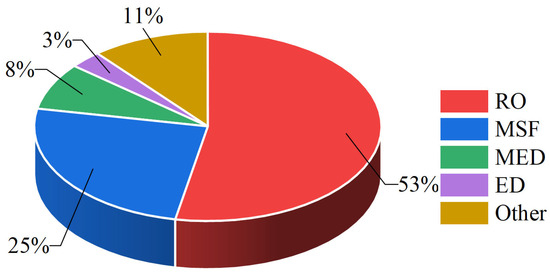
Figure 1: Distribution of global installed capacity by technology (zhang et al., 2024)
Beyond energy consumption, that each new technology seeks to reduce, these are the cost of water and associated GHG emissions which could reflect the sustainability of seawater desalination. On a global scale, this intensive production emits at least 120 MtCO2/year based on studies from the beginning of the 2020s and could, based on a World Bank study, increase to emit 400 MtCO2/year in 2050 if energies remain of fossil origin.
There are multiple solutions for decarbonizing the desalination energy mix. The first approach is to electrify the process and to rely on carbon-free electricity. The second option is based on the production of local carbon-free electricity. Desalination projects (such as that of Sakaka in Saudi Arabia) demonstrate that renewable energies (solar) can now be economically competitive compared to fossil fuels. The last approach, promising for desalination by evaporation, consists in coupling a source of decarbonized heat to the evaporation process itself, via the solar thermal, the geothermal energy or SMRs.
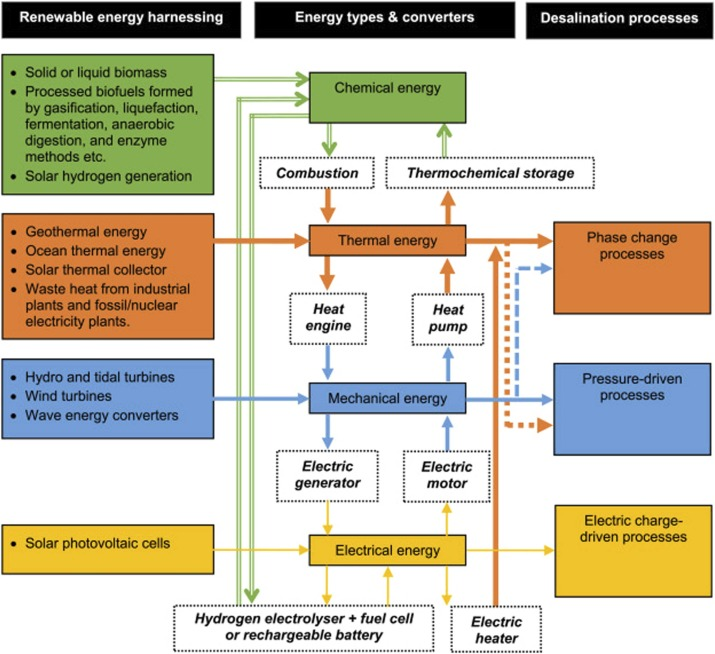
Figure 2: Coupling options between desalination and renewable energies (Ben Rouane et al., 2025)
In the current state of the technologies and energy sources used, the desalination of seawater is a last resort: it locally alleviates water stress but increases energy dependence, transforming a resource crisis into a climate and energy crisis, especially in countries dependent on fossil fuels. Before developing it, states need to control demand, reduce losses, and explore geopolitical alternatives.