


We keep reading that the drought is "slowing down global trade." That phrasing misses the point. While it is true that the maritime network already has little margin—with tensions in Hormuz and diversions in the Red Sea—this third constraint has now taken hold. But the summer of 2026 did not just reveal another logistical bottleneck: it demonstrated, across two continents and through two different mechanisms, that infrastructure dependent on freshwater is being pitted against competing uses as soon as the heat sets in.
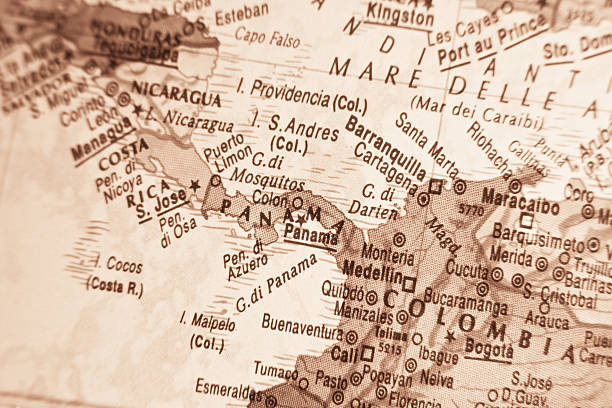
Panama provides the clearest example. On August 20, advisory A-29-2026 capped daily transits at 34 starting in early September, then 32 as of the 15th (the normal capacity is 36). The first step formalizes the status quo, as the canal was already operating at 34 transits per day in July, according to the Panama Canal Authority (ACP). The real reduction comes on the 15th, and it still bears no comparison to the 2023-2024 period, when drought caused traffic to plummet to 22. The announced tightening is preventive, ahead of the dry season, because from May to August, rainfall in the watershed showed a 34% deficit, with inflows to the lake down 44% according to the ACP. However, the lake does not only serve the canal—a lock-based system powered by freshwater—it also provides drinking water for more than half of the Panamanian population and—to a lesser extent—hydroelectric power. When water becomes scarce, the ACP does not simply "slow down" traffic: it makes trade-offs between navigation, the tap, and, to a lesser degree, electricity, all of which draw from the same source. The ACP is blunt: drinking water comes first. In the United States, Lake Mead, the reservoir for the Hoover Dam, fell this summer to its lowest level ever recorded , once again forcing a trade-off between hydroelectric power and drinking water (for 25 million people).
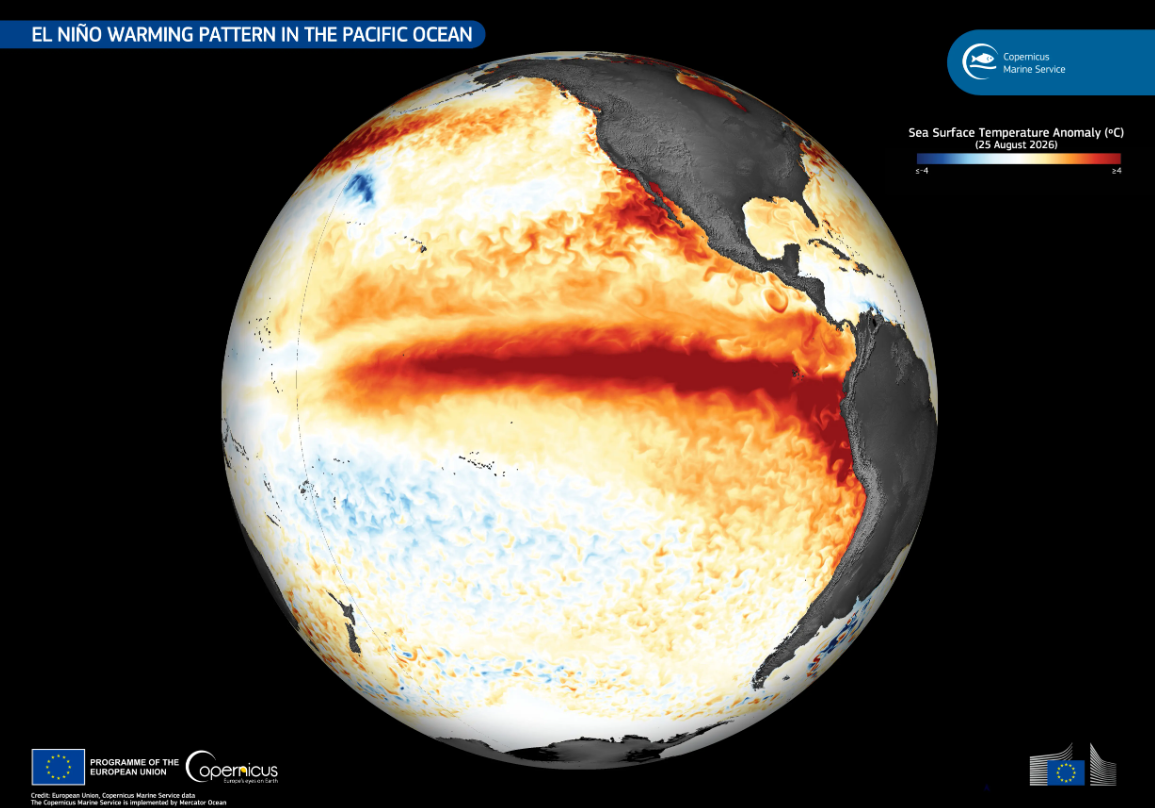
Regarding the cause, caution is required. In 2024, the consortium World Weather Attribution showed that El Niño had doubled the probability of low rainfall, without being able to attribute the drying specifically to human-induced warming. A model by Muñoz (2025) shows that Lake Gatún remains stable under low GHG emissions; disruptive low water levels only become the norm under medium to high emissions.
Europe offers a different version, not through the consumption of a stock, but through the flow rate and temperature of a current. This summer, theRhine fell below its 2018 record at Kaub , forcing cargo ships to carry only a fraction of their capacity; conditions were also severe on the Danube. And the same water that carries the barges also cools the reactors. To protect the river, The ASNR caps the temperature of discharge water; when upstream water is already too warm, EDF must reduce power or even shut down. At Golfech, a reactor was stopped in early August as the Garonne threatened to hit 28°C; at Bugey, the ASNR even had to temporarily relax these limits on July 10 to keep two reactors running, deemed necessary for "grid security," with the authority itself arbitrating between the ecosystem and electricity supply. The river, too low and too warm, is contested like the Gatún, but due to its temperature rather than its volume.
Switching to certain sources of carbon-free electricity (nuclear, hydroelectric) does not eliminate dependence on water: it merely shifts it. The ACP has understood this by reserving "NetZero" slots for the lowest-emission vessels , whereas drought forces rerouting that increases emissions. An asset can be perfectly designed and still remain captive to an input that no amount of engineering can manufacture. This is the limit that the low-carbon transition shifts without "dissolving": it trades a dependence on hydrocarbons for a dependence on water.
Illustration: https://eu-space.europa.eu/components/earth-observation-copernicus/image-of-the-day/el-nino-warming-pattern-pacific-ocean